
By Andrew Turley
Although it is rarely reported, extreme heat is Australia’s deadliest natural disaster. You might remember the Black Saturday fires, which burned 25 million hectares of land, destroyed 3,000 homes, and killed 33 people across Victoria and South Australia. However, less frequently recalled are the heatwaves before and after the fires, which were associated with 432 deaths. Most of these deaths were either the very young or elderly. More generally, since 1900, extreme heat has been associated with 4,555 deaths, more than all other natural disasters recorded in Australia combined!
What will a warmer climate look like?
Living in Queensland, we are all too familiar with the intense heat of our summers. However, climate change is set to make them even hotter. The global use of fossil fuels is at an all-time high, and the emissions from burning these fuels are driving our climate to become warmer (Predicting Future Climate Change). Over the next 25 years, the average temperature in Brisbane is likely to increase by an additional 1.3°C from current levels, reaching about 2.6°C above pre-industrial temperatures. A sweltering 33°C day will become the average in summer, with many days even hotter. The number of hot nights – those above 25°C – is expected to double, along with the associated discomfort and risks of illness and death.
Unsurprisingly, heatwaves are expected to become more frequent and intense, with temperatures exceeding 50°C highly likely by 2050. These extreme temperatures will have widespread effects, including:
- Devastating losses of sensitive plants and animals, such as flying foxes and coral reefs
- Increased frequency of bushfires
- Depletion of water storages due to higher evaporation rates
- Reduced productivity of agricultural crops and livestock
- Strain on infrastructure, including roads, railways, communications, and electrical systems
These impacts are already being felt in Queensland. Quite simply, our weather will become hotter and more challenging to live in than ever before.
What can I do?
Living with extreme heat is something we’re used to in Australia, so there’s thankfully much information available as to how to adapt to these conditions. Our homes, and how we live in them, are the best place to start. We need to consider how to keep both ourselves and our houses cooler, especially during periods of extreme heat. One of the best guides for adapting our homes to climate change is the Commonwealth Government’s YourHome website, where you can get detailed guidance on how to make your home both more sustainable and more comfortable to live in.
Some of the most impactful changes you can make include:
- Keep the heat out
- Shade your walls and windows by plant trees, erecting external screens, window hoods or adding a verandah. Your roof can also be shaded by adding solar panels.
- Dark colours absorb more heat, so choose lighter shades when you next paint your house or repair the roof
- Keep the cool air in
- Insulate your home, seal drafts, and close windows and doors during the heat of the day
- Cool yourself
- Move inside when the day heats up, find a cool spot, stay hydrated, wear loose-fitting clothes and use a fan to keep yourself comfortable
- Cool your environment
- Trees and gardens are natural air conditioners, cooling the environment around you and your neighbours. Avoid the city’s heat-island effect by turning your lawn into a garden, planting out your verge or helping with the care of the bush and street trees in your local area.
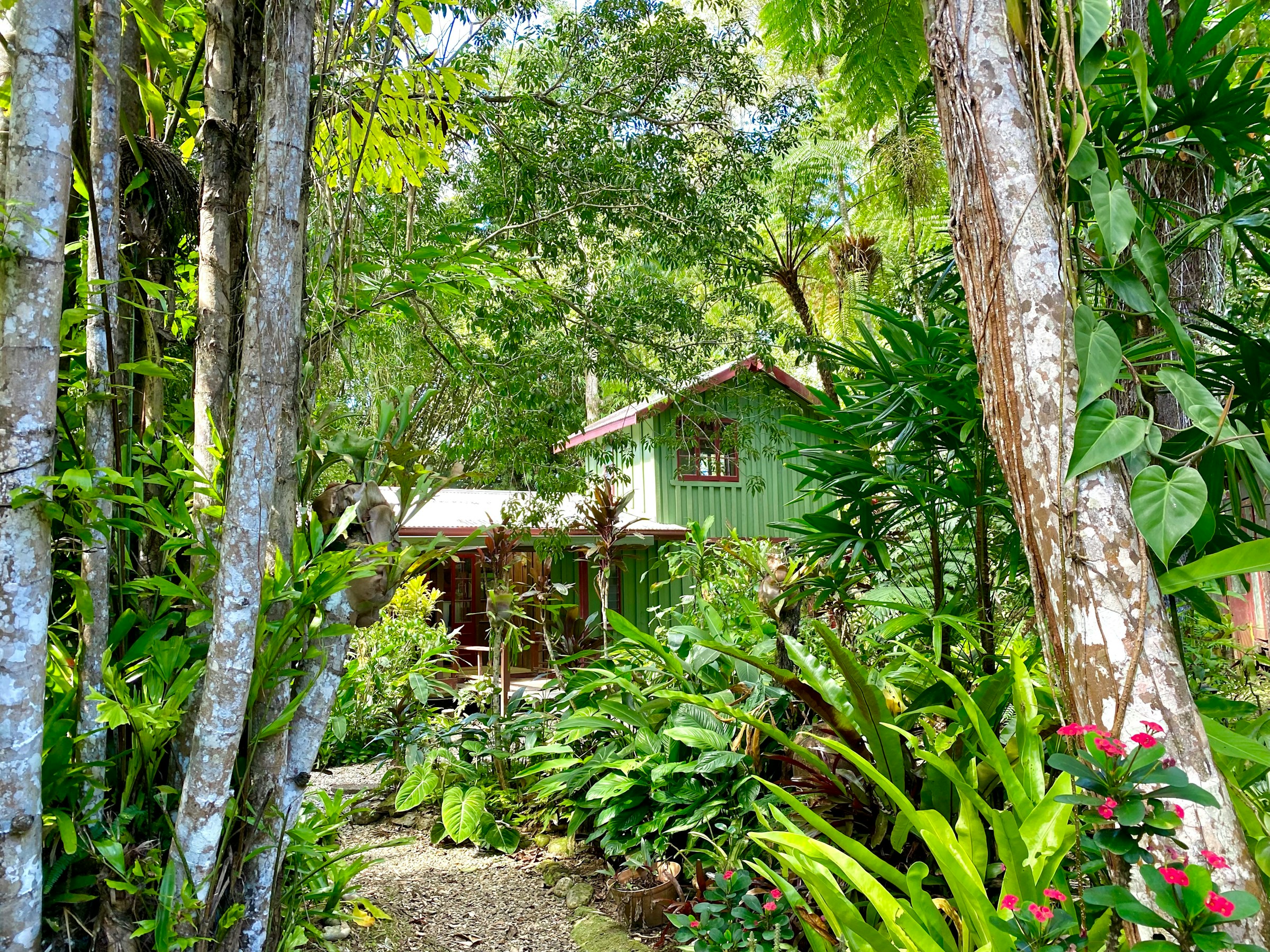
Plants are natural air conditioners – shading us from the burning sun and cooling the air surrounding us.
Photo by Kikki Starr on Unsplash
What about air conditioning?
You might have noticed that using an air conditioner was excluded from the list above. Air conditioners are invaluable for maintaining a cool and comfortable home, making them a worthwhile investment for adapting to our changing climate. However, power failures are more common during periods of extreme heat, so relying solely on an air conditioner is a high-risk strategy, especially if you care for the very young or elderly. Air conditioners should not be used as a crutch to avoid other adaptations.
Furthermore, while air conditioners can be energy efficient, if well chosen, they still consume significant amounts of energy. Your average air conditioner uses between 1.2 – 3.5kWh and, as most of Queensland’s electricity comes from burning fossil fuels, their use also comes with greenhouse gases emissions. This raises the prospect of our response to a warming climate making climate change even worse; a phenomenon already being seen in the sub-continent. As such, air conditioners should be used judiciously and in combination with other strategies to keep heat out and cool air in.
How will our lifestyle change?
Rising temperatures will also force changes to our lifestyle in Brisbane, especially through the summer months. The days of midday cricket and barbecues maybe numbered, with these activities needing to shift to the start and the end of the day. In heatwave events, we’ll need to spend even less time outdoors. Some public spaces and facilities will become unbearably hot, rendering them unusable. Outdoor workers will need to down tools or move indoors and high-intensity activities like running and cycling will become less viable at any time of day. Staying indoors, or at least under shelter, will be the safest way to work, rest and play!
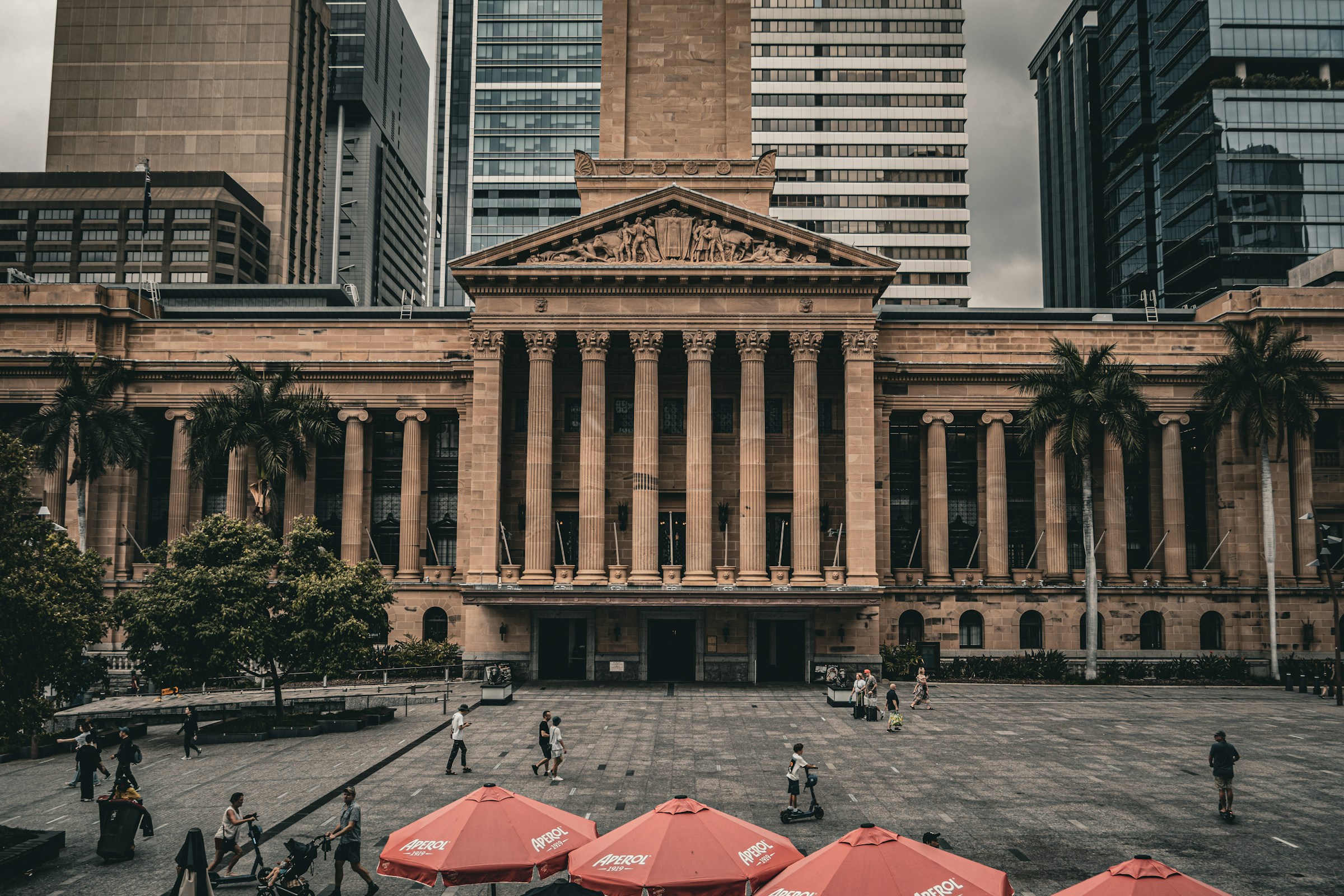
Brisbane’s King George square, a public space that already becomes unbearably hot in extreme heat events. It has been described by some as a “sunbaked hellscape”.
Photo by Samantha Gilmore on Unsplash
We’ll also be called upon more often to help other members of our community. Local infrastructures – such as roads, railways, and communication and electricity systems – are more likely to fail during extreme heatwaves, as has been seen in other severe events worldwide. Emergency services and governments will be stretched thin, limiting their ability to assist everyone during a heat emergency. Simple activities like traveling to appointments, waiting for public transport, or walking to the shops can become dangerous during heatwaves, especially for the elderly. We’ll need to rely more on our neighbours and local community to check on vulnerable individuals, ensure everyone’s safe, and support those who need access to a cool safe space.
Our food supply could be affected?
One often overlooked consequence of a warming climate is its impact on our food supply. While Australia is a net food exporter, we are deeply connected to a global food system, and not immune to climate-induced food shortages. In 2025, India is experiencing its third consecutive year of extreme summer heatwaves, disrupting rice and wheat production and triggering export bans. And marine heatwaves are now starting to affect fish stocks around the globe. These events are driving up global food prices, with ripple effects felt around the world.
Closer to home, Australia has already seen the toll of extreme heat on agriculture. During the 2009 heatwave in Victoria, fruit growers reported crop losses ranging from 20% to 90% in affected areas. And it’s not just crops at risk – livestock are also vulnerable. Research shows that heat stress can reduce milk production in cattle by as much as 40%.
Building food resilience starts at the community level. Simple actions – like growing your own herbs or vegetables, keeping your pantry stocked, participating in a local community garden and learning more about where your food actually comes from – can strengthen food security for you and your whole community.
Now is the time to act
We’re fortunate to live in The Gap – a suburb blessed with a mild climate, forests that help regulate temperature, and a strong community. But even here, we can’t ignore the reality: warmer temperatures are here and extreme heat is coming. We need to start preparing now by:
- Adapting our homes and public spaces to better cope with extreme heat
- Adjusting our lifestyles to reflect a warmer climate
- Building connections with our neighbours and broader community
- Growing some of our own food and keeping a few days’ worth of supplies on hand
- Reducing our energy use, so we don’t make the problem worse.
Adapting to extreme heat won’t be easy, but it’s absolutely possible. And when we take action together, we not only protect ourselves, we build a stronger, more resilient community for the future.
References:
- Exploring 167 yeas of vulnerability
- Longpaddock
- Design for Climate Your Home
- Vittoria Sweltering Cities
- Australian Red Cross Heatwaves and hot weather
- TFI Desk India’s Hottest March in Years: Analysing Heat Wave Impact
- Science Advances Marine high temperature extremes amplifify impacts of climate change
- Climate Councial Australia
- About Yoorala St Community Gardens