
The Quiet Connection Between Roads and Creeks in The Gap
By Simran Kaur
Every day in The Gap, we drive to school, to work, to the shops. We cross bridges, pass bushland, and travel alongside Enoggera Creek without thinking much about what connects the road beneath our tyres to the water beside us.
That connection exists and it is quieter than most people realise.
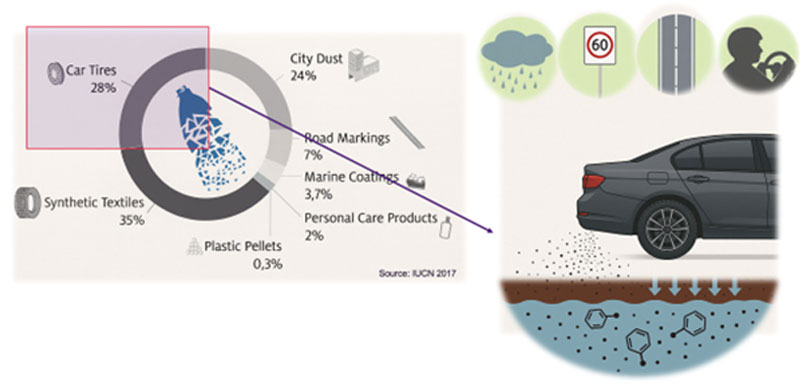
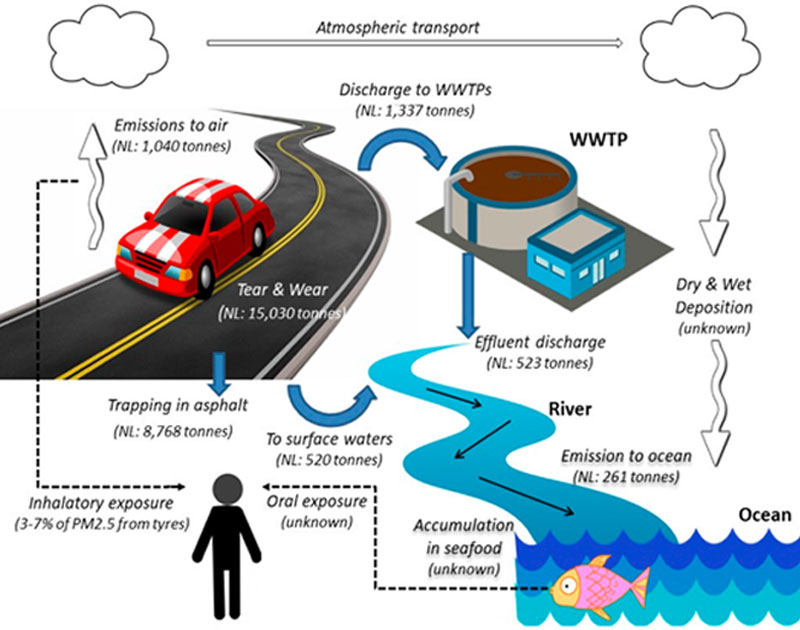
As our tyres roll along Waterworks Road, they slowly wear down. Not in visible chunks, but in tiny fragments created through the everyday friction of rubber against the road. These fragments are known as tyre wear particles.
Over time, they settle on roads and nearby surfaces and can be redistributed by wind.
This isn’t the result of a spill or negligence. It is simply part of how urban systems function
This isn’t a fear story
Microplastics often appear in the news with dramatic language, described as being everywhere, from oceans to food and even our bodies. While researchers are detecting very small particles in many environments, good science communication is not about creating fear. It is about providing context.
Scientists ask careful questions: How much is present? At what levels? Compared to what baseline? What do we know with confidence, and where are the uncertainties?
Being environmentally aware does not require alarm. It requires curiosity and critical thinking. When we encounter bold claims, it is healthy to pause and ask how strong the evidence is and under what conditions impacts might occur. Curiosity leads to better decisions than panic ever will.
What I study at The Queensland Alliance for Environmental Health Sciences (QAEHS), The University of Queensland
As part of my PhD at the Queensland Alliance for Environmental Health Sciences at The University of Queensland, I study tyre wear particles, chemicals leaching from tyres and microplastics in urban environments, including creek water, sediments and outdoor dust in residential areas.
Before reaching waterways, these particles often settle somewhere first. They can move through air, land on surfaces and later be washed away during rainfall. Understanding these pathways helps us see how everyday activities connect to the natural systems around us.
In the laboratory, we analyse chemical “fingerprints” that allow us to estimate how much of these tiny tyre particles are present in the environment.
Tyres Are More Than Rubber
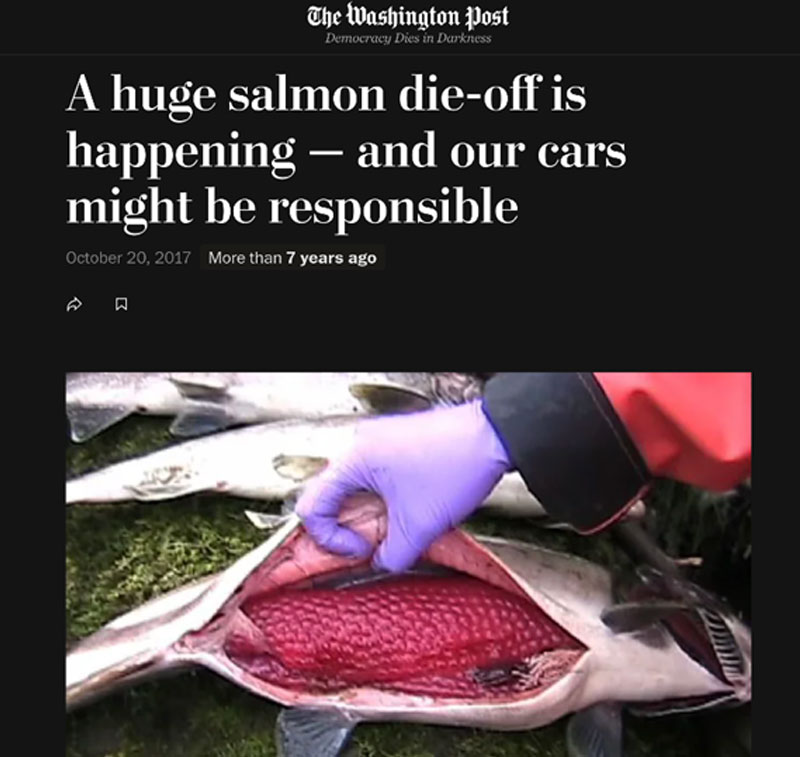
Tyres are made from synthetic rubber and contain chemicals that are intentionally added to improve durability and safety. One widely used additive, called 6PPD, helps prevent tyres from cracking and breaking down too quickly. When it reacts with ozone in the air, it can form another compound known as 6PPD-quinone. This compound gained international attention after research in the United States linked it to salmon deaths. Importantly, those findings were specific to particular fish species and environments.
Scientists are now studying how this chemical behaves in different climates and waterways, including in Australia. The aim is not to create fear, but to better understand how everyday materials move through our environment so we can manage them more wisely. Understanding this helps ensure that creeks like Enoggera Creek remain healthy for the wildlife that call them home.
Why This Matters for The Gap and Beyond
The Gap sits between bushland and city. Many of us value the walking trails, creeks and wildlife corridors that give this suburb its character. At the same time, we remain connected to the wider urban network. Roads link us to work, schools and services, and transport supports daily life.
Even electric vehicles, while reducing exhaust emissions, still rely on tyres. This means tyre wear particles will not disappear with cleaner engines.
A more constructive question is how we design and manage suburbs like ours so that runoff from roads is better filtered before reaching waterways. Improved stormwater systems, green infrastructure and thoughtful urban planning can all reduce impacts.
Awareness helps communities support smarter solutions.
What Can You Do?
This is not about eliminating driving altogether. It is about small, practical actions that collectively reduce impact.
You can:
- Maintain correct tyre pressure. Under-inflated tyres wear faster and release more particles.
- Drive smoothly. Gentle acceleration and braking reduce abrasion.
- Combine trips where possible. Fewer short trips reduce cumulative wear.
- Support green stormwater initiatives. Rain gardens, vegetated swales and permeable surfaces help filter runoff before it reaches creeks.
- Stay informed, not alarmed. Engage with research, ask questions and look beyond headlines.
Small changes, when adopted across a community, can make a meaningful difference.
Stay Curious
There’s a phrase by Steve Jobs that I still remember from my school days: stay hungry, stay foolish.
To me, it means holding on to a genuine desire to keep learning and growing, staying “hungry” for knowledge, while also keeping a beginner’s mindset. Being “foolish” in this sense isn’t about carelessness; it’s about having the courage to question assumptions, take thoughtful risks and remain open to new ideas.
In science, that mindset matters. It reminds us to keep asking questions, to acknowledge uncertainty and to adjust our understanding as evidence evolves.