
Since the 1800s, the temperatures in Australia have increased an average of 1.3°C, and this trend is expected to continue. The burning of coal, oil and gas – the primary causes of climate change – still accounts for 91% of Australia’s energy supply. While solar and wind continue to expand, renewables remain the smallest of energy sources. Globally, fossil fuels provide 81% of energy, but the total amount burnt continues to increase each year (Figure 1). Experts warn that this will lead to further warming of our climate for years to come. But how exactly do they predict these changes?
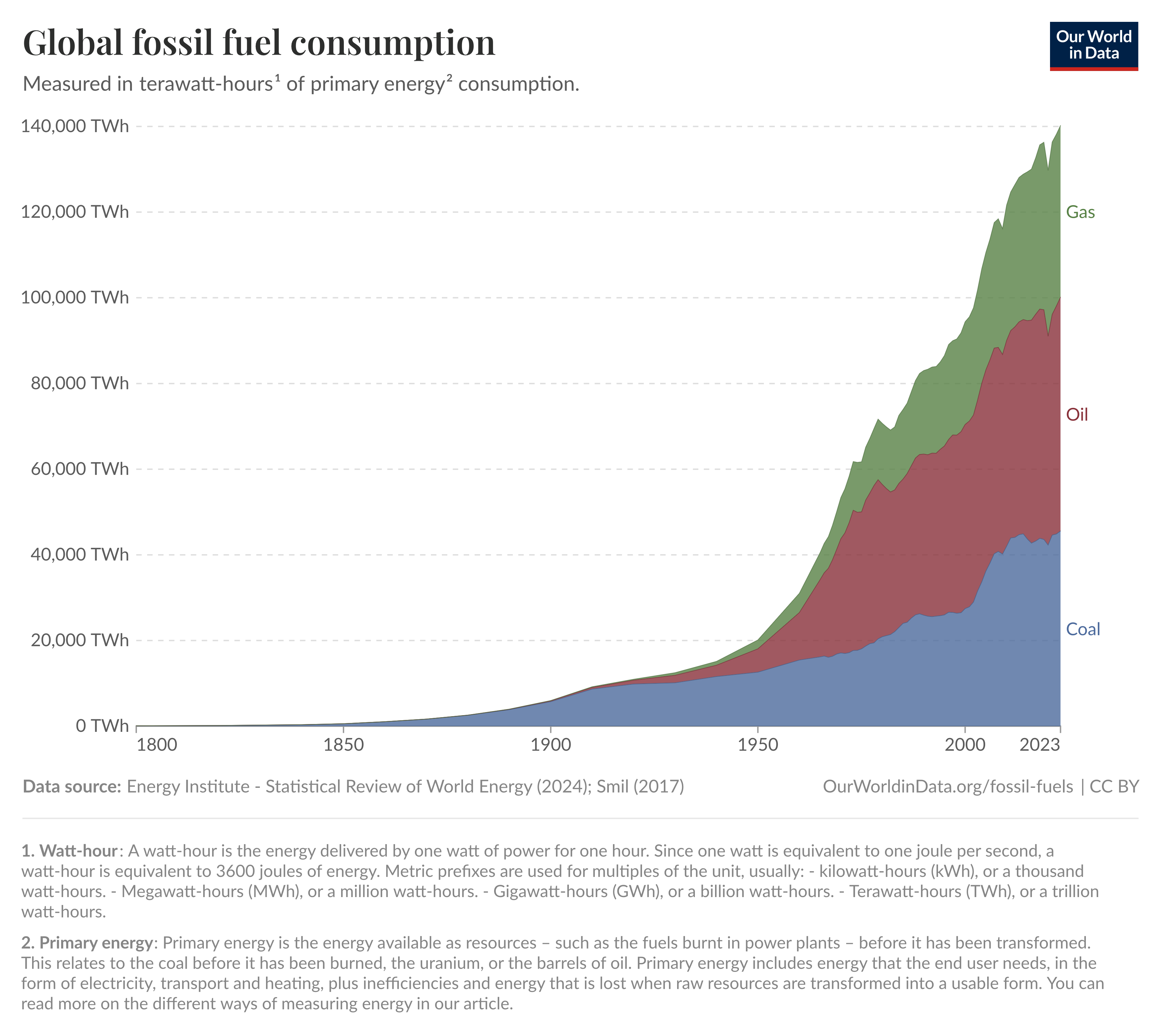
Figure 1. Global fossil fuel consumption 1800 to 2023.
Source: https://ourworldindata.org/grapher/global-fossil-fuel-consumption
Scientists, governments, and industries use models to predict how our climate is likely to change. Models help us navigate complex problems and understand intricate systems. They also allow us to test theories and solutions. From simple models like house plans, road maps, and timetables to complex systems like flight simulators, models are essential tools for exploring and understanding how things work.
Climate refers to the average weather patterns in a location over an extended period, typically 30 years or more. Climate models simulate, using maths, the known physical processes—such as the transfer of energy and materials through the land, oceans, and atmosphere—that shape our climate. There is no single perfect climate model due to the complexity of our climate system. Instead, multiple models have been developed to represent different aspects of the climate. By running multiple models together, we can estimate the range of possible climates and determine the most likely (average) changes that may occur.
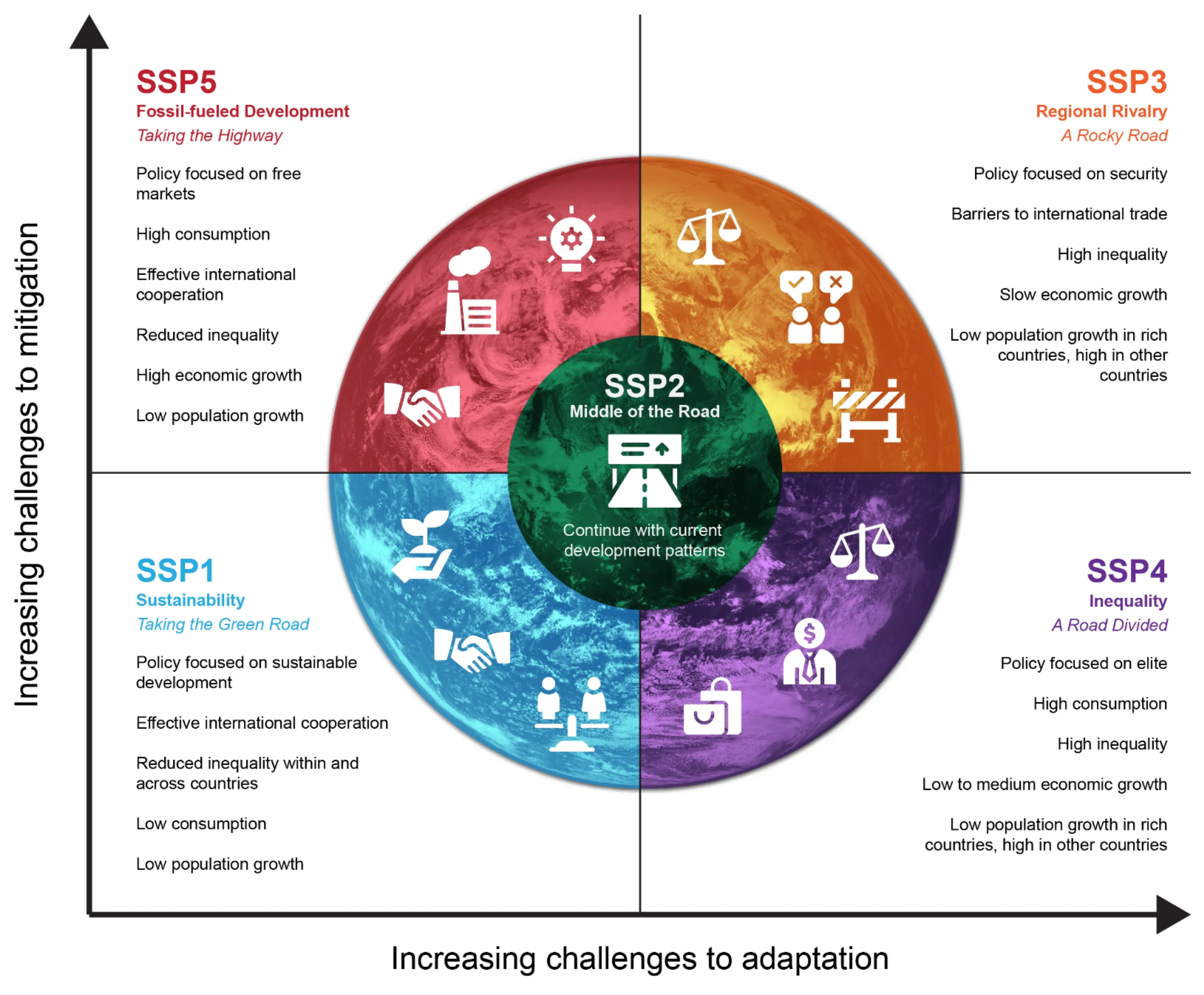
Figure 2. Shared Socioeconomic Pathways (SSPs) describe future societal trends that influence greenhouse gas emissions and climate policy. These narratives are used as standard scenarios in climate change modelling.
Source: https://climatedata.ca/resource/understanding-shared-socio-economic-pathways-ssps/
However, climate models also rely on scenarios of what our future emissions of greenhouse gases will be. Will we transition rapidly to renewable energy, or will we keep burning fossil fuels for generations to come? To consider this, there are standard emission scenarios that have been developed called Shared Socioeconomic Pathways (SSP) (Figure 2). Each pathways reflects a societal narrative, e.g. does inequality grow or reduce, how many people will be alive, and how much and what energy sources will we use. From these narratives the expected greenhouse gas emissions can be estimated.
These scenarios range from the best-case scenario, where inequality is reduced and the world transitions to net-zero emissions by 2050, to the worst-case scenario, where fossil fuel use triples by 2075. By running climate models against these greenhouse gas emission scenarios, we can estimate how our climate is likely to change in the future (Figure 3). Although no one can predict the future with absolute certainty, the most extreme scenarios are considered unlikely due to international climate pledges, increased investments in renewable energy, and the decreasing return on investment for fossil fuels. An intermediate scenario (SSP2-4.5) is thought to be the most likely greenhouse gas emissions scenario for our future.
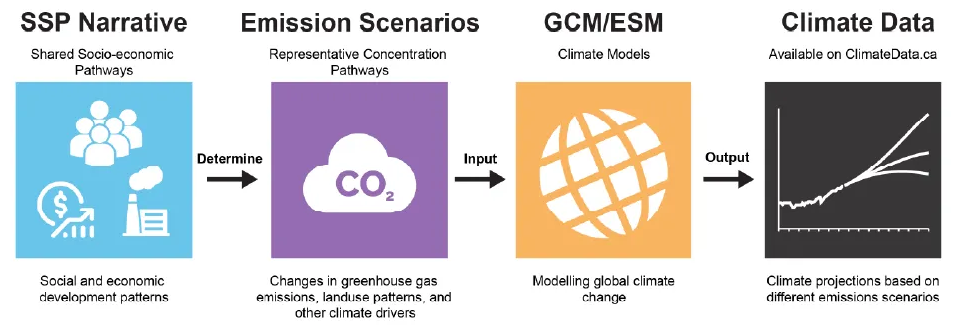
Figure 3. The sequence of information used to predict future climate change.
Source: https://climatedata.ca/resource/understanding-shared-socio-economic-pathways-ssps/
So, how is this relevant to us living in The Gap? In Queensland, we’re fortunate that our climate has been extensively modelled, and — amazingly — everyone can access these models through the Queensland Government’s Future Climate Dashboard. These models are detailed enough to estimate how temperatures, rainfall, droughts, and bushfires are likely to change in our suburb over the coming years. By analyzing these climate models, we can begin to foresee how our lives and society will need to adapt to the changing climate.
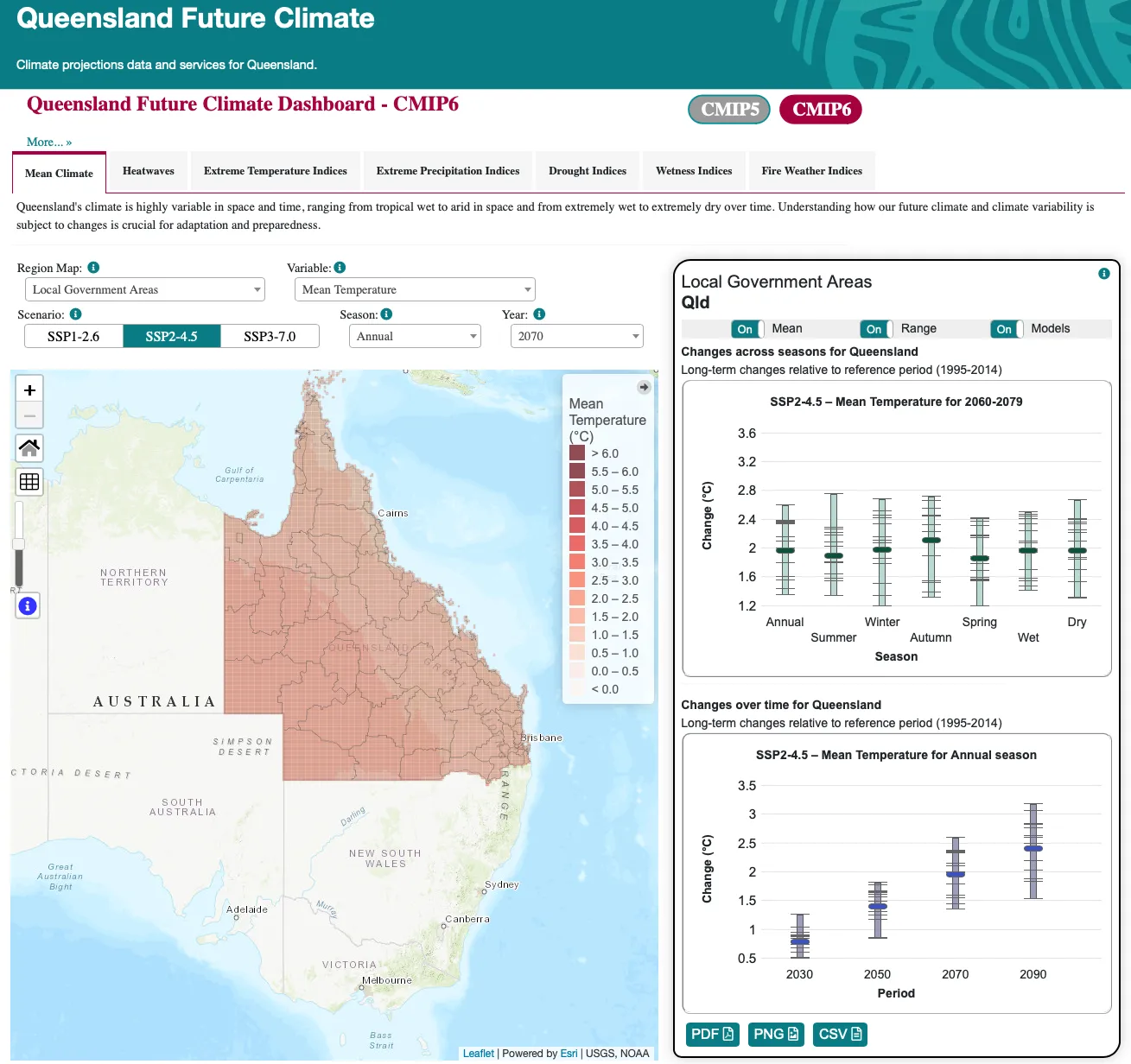
Figure 4. Queensland Future Climate Dashboard, where you can explore how climate change emission scenarios are likely to affect temperature, rainfall, drought and bushfires.
Source: https://longpaddock.qld.gov.au/qld-future-climate/dashboard-cmip6/#responseTab1
With an understanding of what models are, the assumptions that go into them, and the ability to explore them ourselves, we will begin to delve into what these models can reveal for us in future blogs. We’ll examine the projected impact of climate change on temperature, rainfall, droughts, floods, and bushfires in our area. Finally, we’ll consider what these changes might mean for you and our community, and how we can start adapting to these inevitable changes.
References:
- https://berkeleyearth.org/policy-insights/
- https://www.energy.gov.au/energy-data/australian-energy-statistics/data- charts/australian-energy-consumption-fuel-type
- https://ourworldindata.org/grapher/sub-energy-fossil-renewables-nuclear
- https://climatedata.ca/resource/understanding-shared-socio-economic-pathways-ssps/
- https://www.nature.com/articles/d41586-020-00177-3
- https://longpaddock.qld.gov.au/qld-future-climate/dashboard-cmip6/#responseTab1