

Rewilding Rebels
The Story so Far
Rewilding Rebels started with a simple idea: any backyard in The Gap can become a stepping stone for local wildlife. Working with Paten Park Native Nursery, we’ve created a set of three take-home cards — one each for birds, butterflies and insects, and frogs. Each card shows a local species on the front and, on the back, exactly what to plant and add to bring that wildlife group home.
How to use the cards: Pick the wildlife you’d most like to see. Take the card into Paten Park Native Nursery, and use the plant list to build your own habitat patch. A few of the right natives, a little water, and some shelter is all it takes.
The Gap sits on granitic soil with long dry spells, so every plant on these lists has been chosen to suit local conditions.
With thanks to award-winning local photographer and writer Colin Bushell, whose wildlife photography brings these cards to life.
Rewilding resources:
- Habitat Stepping Stones
- Backyard Buddies
- WildBNB
- Gardening for Wildlife in Greater Brisbane
- Wildlife in Brisbane (Brisbane City Council)
- Gardens for Wildlife Victoria (a model of what we could build in Qld)
- SOWN, Plants to Plant
- Paten Park Native Nursery —
- Richmond Birdwing host vine guide (Moggill Creek)
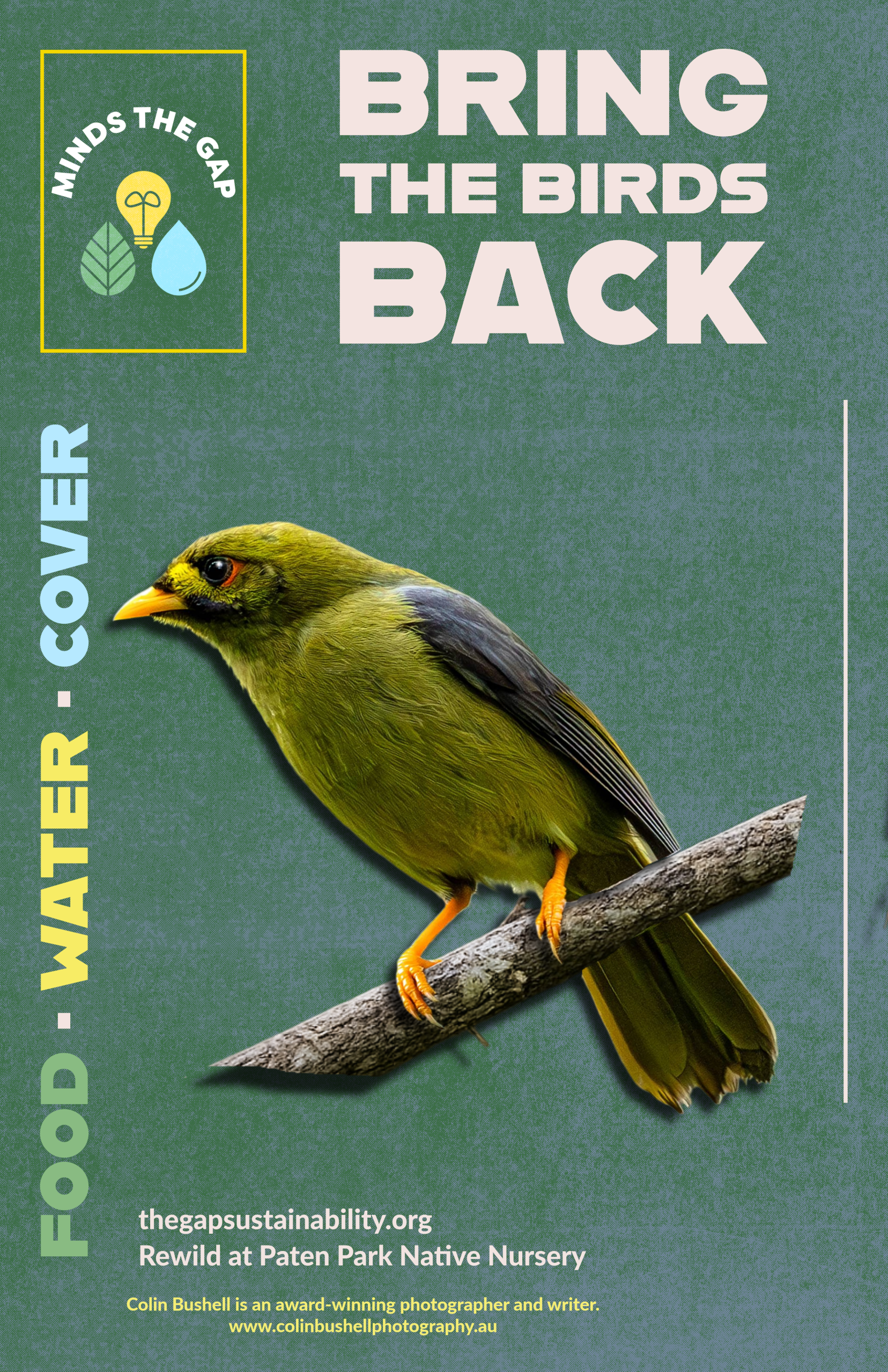
Food, water and cover turn any yard into a bird stop. Layer the garden — groundcover, shrubs and trees — and leave a few dense shrubs for shelter.
Trees: Hymenosporum flavum (flowers and fruit) · Syzygium australe (flowers and fruit) · Allocasuarina littoralis (seeds) · Eucalyptus sp. (flowers, insects)
Shrubs: Eupomatia laurina (flowers and fruit) · Pittosporum multiflorum (shelter, flower, fruit, insects) · Acacia complanata (flowers and seeds, insects) · Dodonaea triquetra (fruit and seeds) · Alchornea ilicifolia (shelter, insects) · Alyxia ruscifolia (shelter)
Herbs: Dianella caerulea (insects) · Einadia hastata (fruit) · Lomandra hystrix (insects) · Chrysocephalum apiculatum (insects)
Climbers: Rubus probus (fruit) · Maclura cochinchinensis (fruit, flowers, shelter) · Geitonoplesium cymosum (fruit) · Hardenbergia violacea (insects)
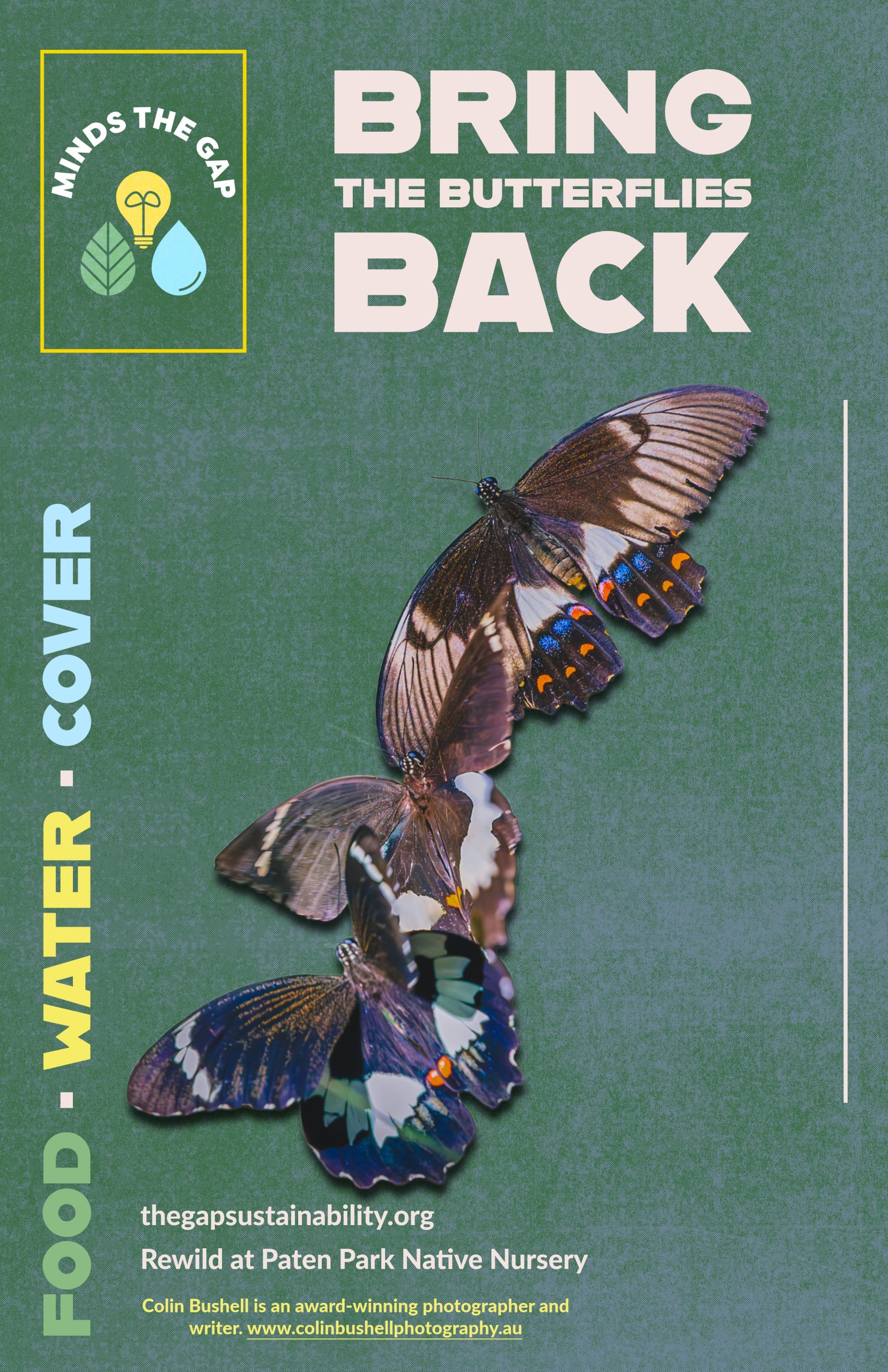
Plant the host plants, skip the spray, and watch them arrive. The star is the Richmond Birdwing vine — and please remove any Dutchman’s Pipe, a toxic look-alike that kills the caterpillars.
Trees: Acacia maidenii (various, including Blue Jewel, Line Blue and Tailed Emperor) · Myrsine variabilis (White Line Blue) · Acronychia laevis (Orchard Swallowtail) · Neolitsea dealbata (Blue Triangle) · Cryptocarya laevigata (Blue Triangle) · Pararchidendron pruinosum (Tailed Emperor)
Shrubs: Breynia oblongifolia (Grass Yellow) · Senna acclinis (Grass Yellow) · Hovea acutifolia (moths) · Acacia aulacocarpa (various, including Blue Jewel, Line Blue and Tailed Emperor) · Pittosporum revolutum (Bright Cornelian) · Hibiscus heterophyllus (many moths) · Cordyline sp. (Miskin’s Swiftail) · Pavetta australiensis (flowers, food for adult butterflies; moths)
Herbs: Themeda triandra (Evening Brown, Common Brown, Yellow Banded Dart) · Pseuderanthemum variabile (Blue Argus, Australian Leafwing, Common Eggfly) · Dianella sp. (Yellow Banded Dart) · Lomandra sp. (various Skipper butterflies) · Goodenia rotundifolia (Meadow Argus)
Vines: Pararistolochia praevenosa — Richmond Birdwing vine (Richmond Birdwing, Big Greasy) · Melodorum leichhardtii (Four Barred Swordtail, Pale Green Triangle, Blue Tiger) · Parsonsia straminea (Common Crow) · Smilax australis (Black-spotted Flash, Miskin’s Jewel, Cephenes Blue, Snake Vine Moth)
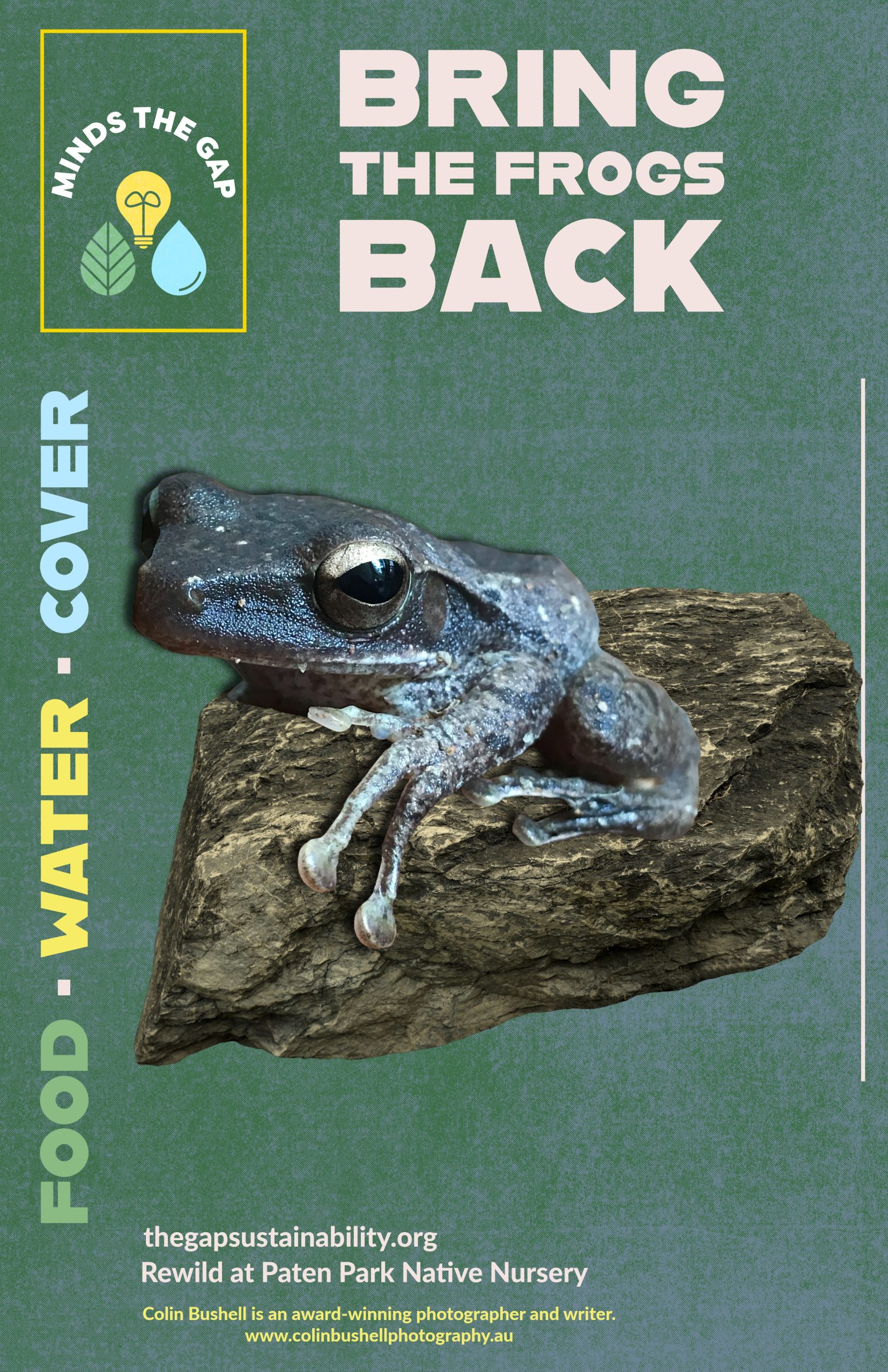
Tadpoles feed on algae and decaying plant matter, grazing the microscopic life that grows on native water plants. A small pond with the right plants — and no fish — is all frogs need.
Floating (in the water): Ceratophyllum demersum (Hornwort) · Myriophyllum sp. (Water Milfoil) · Lemna sp. (Duckweed)
In pots or planted: Vallisneria nana (Ribbon Weed) · Baumea rubiginosa (Soft Twig Rush) · Juncus usitatus (Common Rush)
Pond margins: Lomandra hystrix (Creek Mat Rush) · Dianella sp. (Blue Flax Lilly) · Gahnia sp. · Carex appressa · Cordyline sp. · Alocasia brisbanensis (Cunjevoi) · Adiantum hispidulum (Rough Leaf Maidenhair) · Doodia aspera (Rasp Fern) · Asplenium australasicum (Bird’s Nest Fern)
Cards produced by The Gap Sustainability Initiative in partnership with:
Paul Ryan from Paten Park Native Nursery who shared his expert knowledge on all things plants in the local region.
Wildlife photography by Colin Bushell, award-winning local photographer and writer.
· Facebook: Colin BUSHELL Photography
· Instagram: @Colbushell

Street Tree
TLC
Street Tree TLC is all about giving the verge trees lining our streets some tender loving care. Join us in caring for our neighborhood trees and making sure they thrive, offering beauty, shade, and cleaner air for everyone.

Cycle
Shift
Cycle Shift aims to empower the community to take up cycling as a main form of transport. Together, we can reduce our carbon footprint and make local travel healthier, more affordable, and fun.
Rewilding
Rebels
Rewilding Rebels encourages residents to bring native wildlife back to our gardens and green spaces. By restoring natural habitats, we can create an environment that supports biodiversity and resilient ecosystems.
Get Involved:
All are welcome to join this project by emailing your details to Monika:

Make a Donation
You can support The Gap Sustainability’s work by making a donation. All donations above $2 are tax-deductible. Click the button below to open our Square donations form new browser tab.