
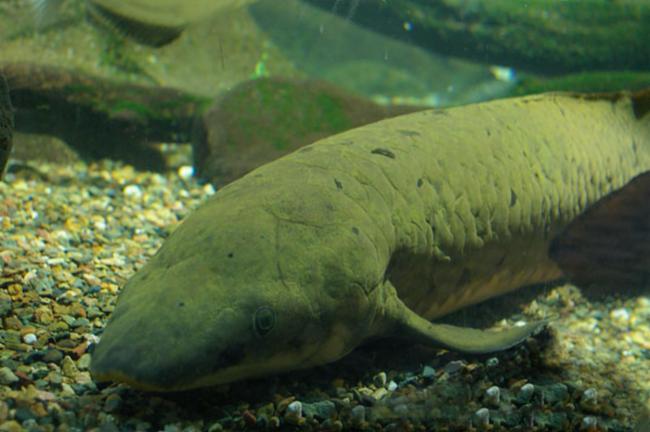
The Australian lungfish, Neoceratodus forsteri. Image: Atlas of Living Australia
By Brendan Ross
After dusk, if you sit quietly on the banks of Enoggera Creek, you might witness something extraordinary. Out of the stillness, a dark shape may rise from the water’s depths, a head as big as your fist. Then, not a splash, but a sudden exhalation—wet and ancient. And a lungful of air taken in the open night, before the mysterious creature retreats back into the murky pond.
In summer, this eerie ritual unfolds almost nightly in The Gap. And the creature responsible? One of the oldest vertebrates on the planet: the Australian lungfish (Neoceratodus forsteri).
Living Fossils in Our Backyard
Often called “living fossils,” Australian lungfish have graced this continent for more than 100 million years. Their ancestors predate the dinosaurs, and they’ve remained relatively unchanged ever since. While once found more widely in Queensland, the species now exists only in a few rivers and water bodies in Queensland, including Enoggera Creek.
Between 2001 and the present, in the warmer months, I have regularly observed one, and commonly two large adults at once, at several favourite locations downstream of the Enoggera Reservoir, between Yoorala St and Walton Bridge. These lungfish seem to be quietly surviving in the shadows.
A Story of Translocation
As lungfish researcher Anne Kempe explains, these gentle giants were introduced to the Enoggera Reservoir in 1896 by a retired banker, Daniel O’Connor. This makes them one of Australia’s earliest examples of “conservation translocation”. Their relocation was a pioneering attempt to secure the species’ survival beyond their range in the Burnett and Mary Rivers.
This kind of ecological intervention, moving vulnerable species into new but suitable habitats, was groundbreaking then and remains relevant today. For example, recently there has been a proposal to reintroduce platypus to parts of their former range in the creek at The Gap. Similar rewilding efforts are underway across Australia, from the spotted tree frog to the greater bilby, showing that the strategy remains vital for conservation.
What Makes the Lungfish Unique?
The Australian lungfish is easily distinguished by its thick, torpedo-shaped body and unique anatomy. Unlike most fish, it possesses both gills and a single functioning lung, allowing it to extract oxygen from water or air. This is an adaptation for surviving in oxygen-poor conditions. Its large, paddle-like front and pelvic fins are used to slowly scull through still water, hinting at its evolutionary link to early land animals.
Lungfish prefer deep, slower-moving pools with submerged logs, aquatic plants, and shaded banks. I have locally seen adults around one metre in length, though scientists have recorded them at over 1.5 metres and 40kg in weight.
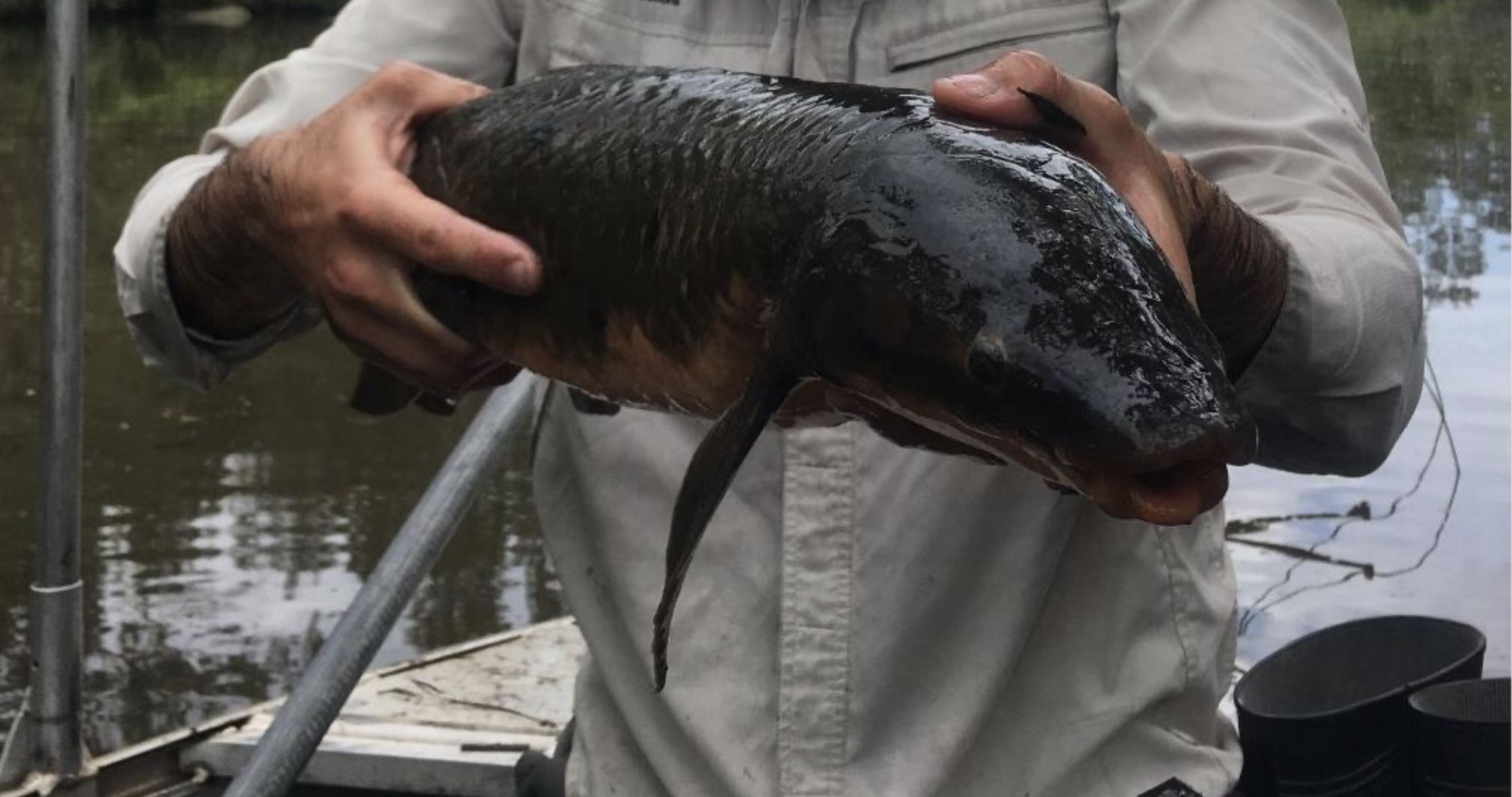
Australian Lungfish. Photo: Jack_m via Atlas of Living Australia (CC BY 4.0)
Threatened, Protected, and Watched
Despite their resilience, lungfish face mounting threats. Changes to water quality, river flows, and habitat fragmentation have placed their populations at risk. They’re now protected under Australia’s federal *Environment Protection and Biodiversity Conservation Act* and the Queensland Fisheries Act. These laws make it illegal to catch or disturb lungfish without special permission and people have been prosecuted.
Seqwater’s Senior Research Scientist, Dr David Roberts, plays a key role in monitoring and supporting lungfish populations. His data confirms the presence of healthy individuals in the Mid-Brisbane River catchment. Indeed, Seqwater teamed up with Healthy Land and Water to revegetate parts of Brisbane River with eel grass to support lungfish breeding, as Jerry Coleby-William’s explains in this Gardening Australia video.
How to Spot a Lungfish
Finding a lungfish requires patience and quiet. The warmer months are best.
Head to a deep, larger section of the creek around sunset. Mosquito repellent and long sleeves recommended, along with a torch. Sit quietly on the edge of the bank. Wait 20–30 minutes. Keep your ears open for a sudden burst of breath, like a small bellows. You may only hear it 3 or 4 times an hour, so be attentive. It will sound like someone exhaling. Shine your flashlight quickly toward the sound—you might glimpse a mouth breaking the surface, then spot the long, dark body of the fish gliding below.
Once you see one, it’s unmistakable—a true freshwater giant, sometimes over a metre long. They are slow, deliberate and almost sluggish, unlike the more slender snaking movements of the long finned eel, or the bottom-shuffling bursts of the eel-tailed catfish.
If you prefer a guaranteed sighting, visit Walkabout Creek Discovery Centre in The Gap, where you can see a living lungfish that is estimated to be 90 years old and one of the oldest living captive individuals in the world. An even older lungfish, ‘Methuselah”, can be seen at the California Academy of Sciences in California.
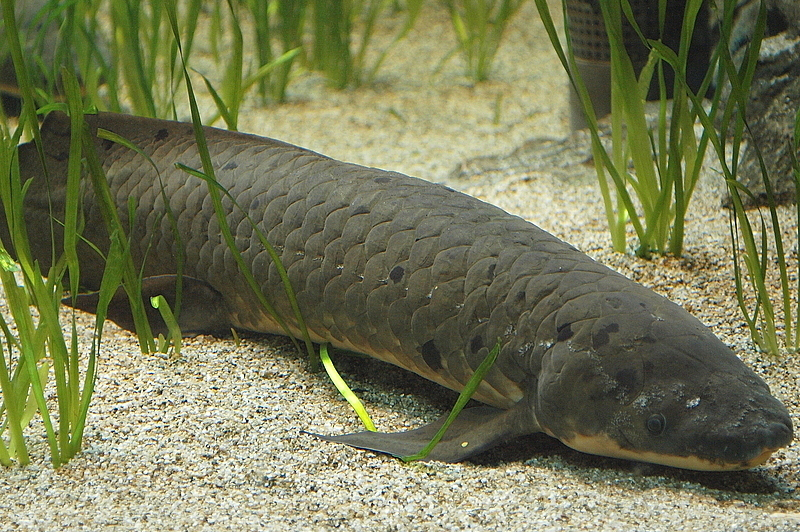
Australian Lungfish, Neoceratodus forsteri Photo: OpenCage.info, via Fishes of Australia, licensed under CC BY-NC-SA 3.0 AU.
A Fish That Captures Imaginations
The lungfish’s mythic status in Queensland culture runs deep.
A 1926 story in the Brisbane Courier describes the out-of-water transportation of three fish in a wooden box to the Old Queensland Museum. I still remember the aquarium that housed them on the verandah of the building at Bowen Hills. Generations of school children peered into that tank, fascinated by a fish that could breathe air like them.
Today, the lungfish even inspires public art. A striking new artwork titled Lungfish Dreamz by Samuel Tupou now graces Brisbane’s Queen’s Wharf development.
Why They Matter
The lungfish reminds us that our creeks are not just drains or backdrops but rather ancient living systems. And these fish might even be considered ambassadors of deep time and resilience. It’s up to us to continue to protect and enhance these refuges. SOWN is a great way to get involved.