
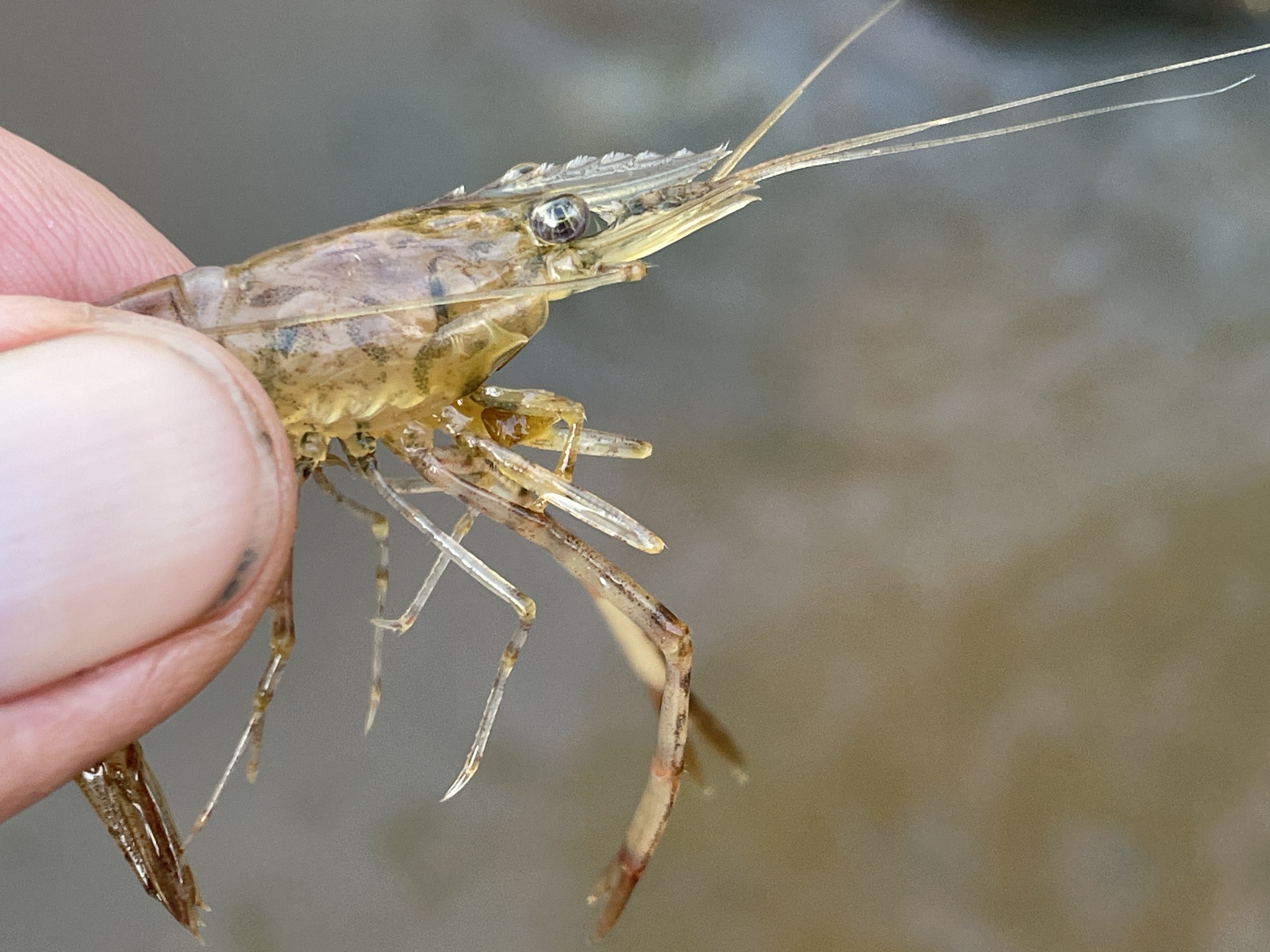
Macrobrachium Australiense: This Australian freshwater prawn. Photo by Marilyn Connell via Atlas of Living Australia. Licensed under CC BY 4.0.
By Brendan Ross
After dark, when the last dog-walkers leave the park, a quiet workforce takes over our creeks. If you shine a flashlight along Enoggera or Fish Creek, you might catch a glimmer of two tiny shining eyes under the water.
Meet Macrobrachium australiense, the Australian freshwater prawn. Also called the Australian long-armed shrimp, these small critters are found widely across eastern Australia including right here in The Gap.
They were recently detected at several creek sites in our suburb—including Walton Bridge, Wittonga Park, and Riaweena Street—through eDNA sampling by The Gap Sustainability Initiative and Save Our Waterways Now (SOWN).
With delicate see-through shells and long antennae, these prawns quietly work the night shift, cleaning up nutrients and helping feed creek dwellers like the platypus.
What do Freshwater Prawns Look Like?
Freshwater prawns are decapods—the order of ten-legged crustaceans that also includes crabs, crayfish, and lobsters. The second pair of legs in freshwater prawns is especially long and ends in tiny claws which are perfect for grabbing food and defending territory.
They grow to about 7 cm long and are usually translucent brownish-green, sometimes mottled. Their clear outer shell makes watching them feed a bit like seeing an x-ray in motion.
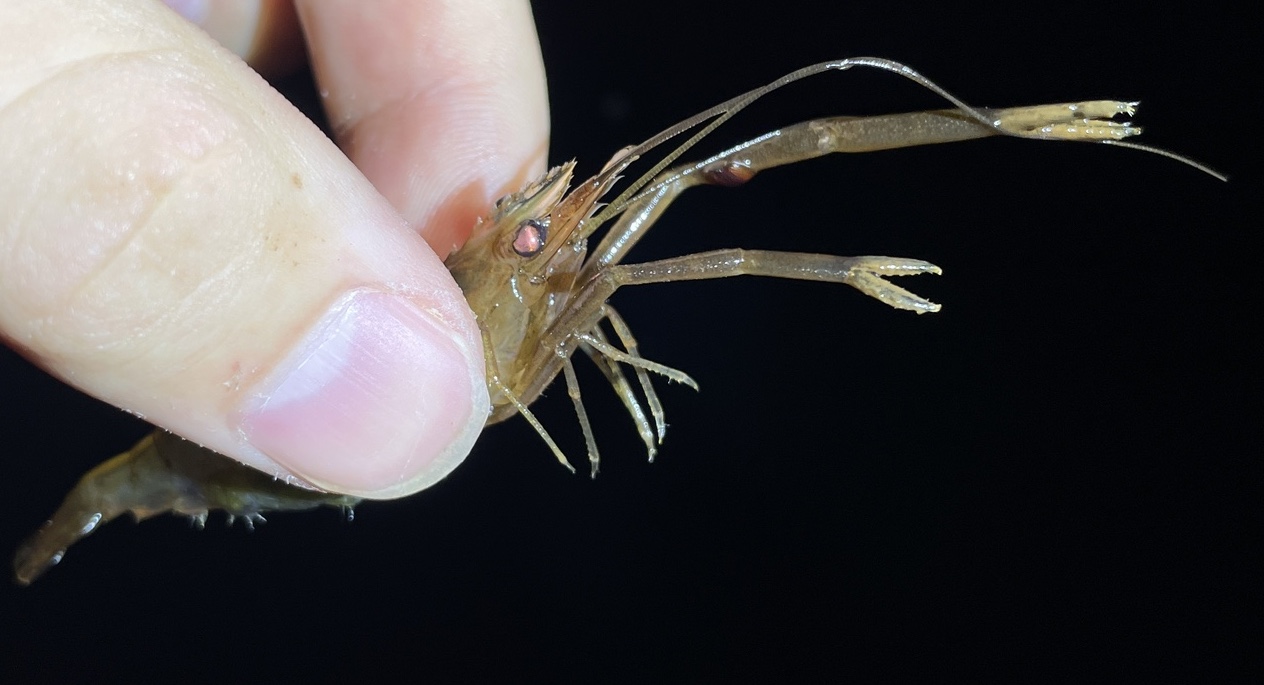
Freshwater Prawn: Image by Indra Bone via Atlas of Living Australia. Licensed under CC BY NC.
How to Spot Them
Want to see a freshwater prawn for yourself? All you need is a quiet creekside evening and a flashlight. A red light filter is even better because it’s gentler on wildlife.
Head to the water’s edge at dusk, especially near rocks, fallen branches, or leaf litter. Sweep your light slowly along the bottom and watch for shimmering movement or beady eyes. You might spot them cleaning algae off stones or fanning the water with their legs.
Great creek spots in The Gap include Riaweena Street near the scout den, Wittonga Park, and Walton Bridge Reserve.
Night Moves
These prawns aren’t just stationary creek dwellers. In 2018, researchers observed them climbing the overflow steps at Gold Creek Reservoir, showing just how mobile they can be.
Studies suggest M. australiense travel upstream at night during early summer or after rain. With similar conditions in Enoggera Creek, there’s a good chance this happens locally too, so watch closely and you might see a tiny procession heading upstream.
From Creek to Tank
In South East Queensland, freshwater prawns aren’t just wild creatures—they’re also farmed commercially.
Aquaculture suppliers near Tarome, Queensland grow them as bait for fishing as well as food for pet fish and turtles due to their high protein content. They’re also popular in aquariums, where their peaceful nature and algae-cleaning habits add movement and interest to the tank. Rather than taking them from the creek, it is better to order commercially-grown stock from online aquarium stores.
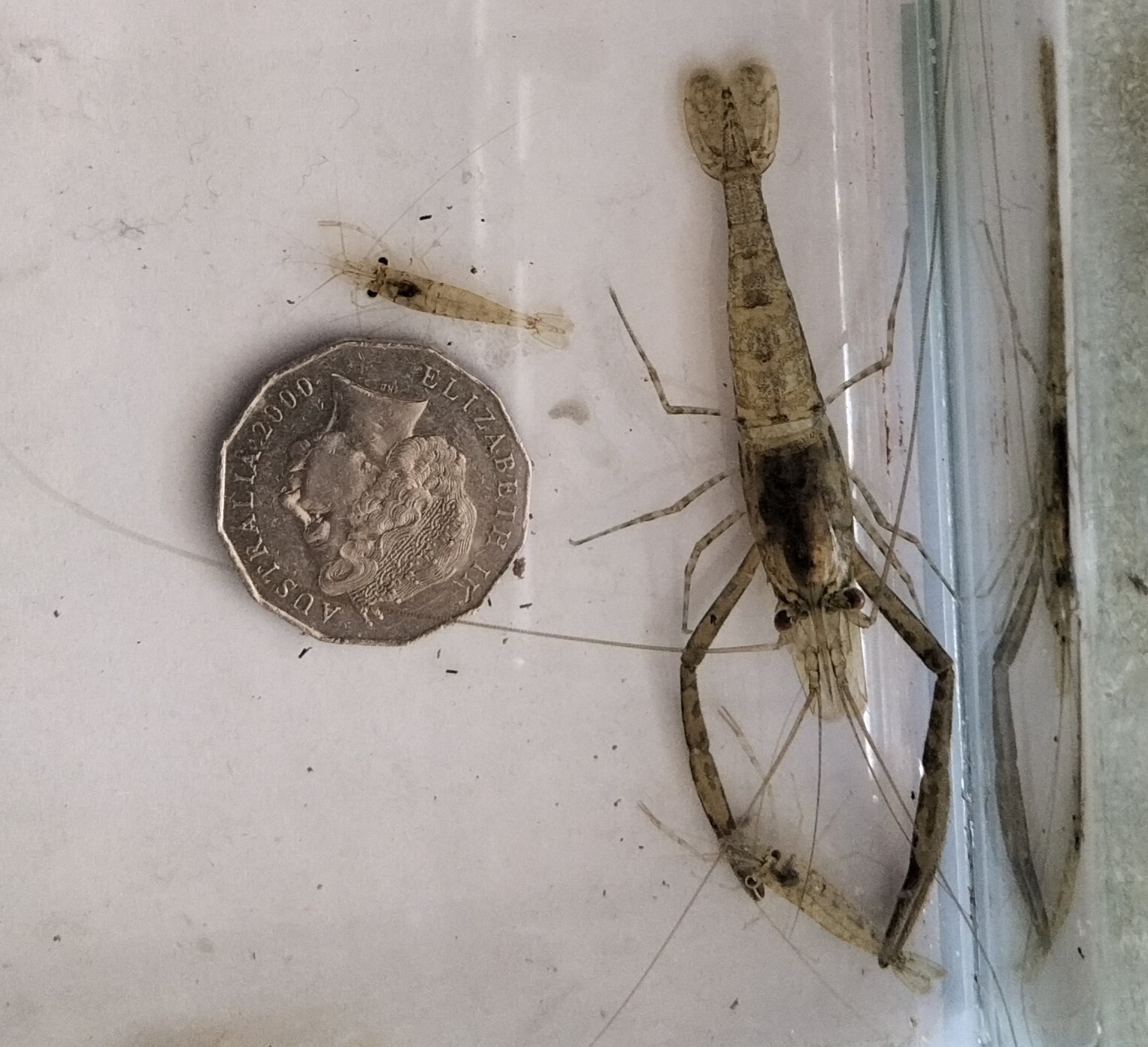
Macrobrachium Australiense: Photo by Jonathon Love via Atlas of Living Australia. Licensed under CC BY 4.0.
Volunteer Cleaners
Prawns play a vital role in creek health. They scuttle over leaf litter, graze on algae, and break down decaying material—essentially cleaning as they go.
This prevents sludge buildup, recycles nutrients, and keeps oxygen flowing. Ecologists call them detritivores but you can simply call them the invisible night cleaners.
In addition to their cleaning services, they also fulfil another important function: they are prey for other animals such as the eel-tailed catfish and nankeen night heron, as well as a beneficial food source for our once-familiar Enoggera creek resident, the platypus
Why They Matter for the Platypus
Platypus are sensitive to change. They need clean water, stable banks, and a steady supply of food to survive.
While platypus typically eat aquatic insects, freshwater prawns also provide a high-protein snack, especially during cooler months when insect numbers drop. That is why a healthy prawn population means a more resilient habitat for platypus.
Help the Night Crew
Supporting freshwater prawns helps the whole ecosystem. Here’s how you can help:
- Minimise chemicals and waste – Avoid fertilisers and cleaners that wash into drains and creeks.
- Leave the leaf litter – Logs, rocks, and debris provide shelter and food. Healthy creeks can look messy.
- Join your local bushcare group – Native plants cool and protect creeks. Groups like SOWN hold regular volunteer sessions in The Gap.
Join the Creek Survey
The best way to protect our creek species is to get involved. Join our community-led Creek Survey Program. Every month, locals gather to sample water, identify macroinvertebrates like prawns, and build a deeper understanding of creek life.
No science degree required—just curiosity, care, and a willingness to get your hands a little wet. Maybe you’ll be the one to spot a freshwater prawn—and know exactly what it means.
Join the next creek survey:
Location: Fursman Crossing Park, The Gap
When: Every 3rd Sunday of the Month from 8.30 to 10.30am (weather permitting)